Anxiety and Your Loopy Mind
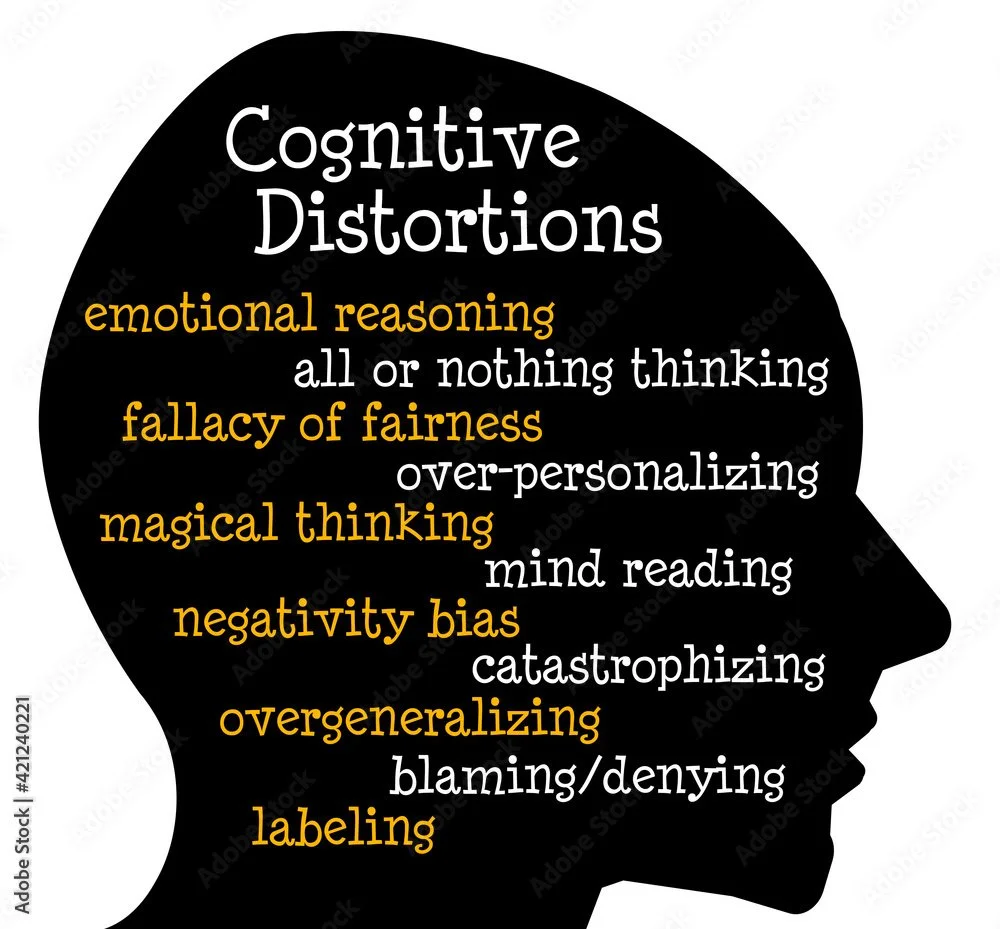
Thoughts that spiral out of control. Overthinking yourself into a negative state of mind that becomes like an infinite loop where you feel there’s no way out. Round and round you go, and you’ve entered into the loopy thinking style that’s sabotaging your happiness and peace of mind. This type of loop thinking which I refer to as the loopy mindset is affecting your life negatively, and it probably has been for years. “Think positive” you hear a well-meaning friend say. “It’s not the end of the world”, you hear someone else say. Somehow you don’t feel better and insist on staying in the loopy mindset. You put on a CD, “Just Feel Better” by Aerosmith, and it helps at least for the duration of the song. If only you could hold on to that positive feeling. Loop thinking or loopy thinking is formally referred to as Cognitive Distortions. This term was invented by Aaron Beck, a psychologist in the 1970’s. Aaron Beck was the pioneer of Cognitive Psychology and invented the Cognitive Behaviour Therapy model. That model goes beyond the scope of this article.
What are cognitive distortions? Cognitive Distortions are unrealistic and irrational thoughts. They are an exaggerated and negative perception of our lives and the world around us. This type of loopy thinking is very common and unavoidable and seems to emerge so naturally that they are sometimes referred to by therapists as automatic thoughts. This type of loopy thinking can be triggered when you are sad, stressed out, anxious, or depressed. They can lead you down a path of misery, trigger your anxiety, and make you feel downright awful. These thoughts have an impact on our life as they can alter our perception of the world as unsafe or even dangerous. Imagine the consequences of someone who has talked themselves into such a negative loop that they decide it’s safer not to leave their house anymore.
The brain likes to try to make sense of things and takes short cuts at times to avoid dealing with information overload mental processing. One of the negative results is cognitive distortions. It’s as though the filters are “off” and we have to be the ones to reprogram the thinking that’s causing this unhelpful response. Changing the thoughts that are causing this is like putting on a different filter while your brain is attempting to take a shortcut to process everything.
Cognitive distortion can interfere with your enjoyment of life. They can influence your perception of life and prevent you from living. Repeated thoughts such as,
“I’ll never get this right”, can have a negative effect on your mental health and well-being over time. Using The Reframe Method and trying to change your perspective on things helps as well as changing thoughts that are causing you to spiral into loopy thinking. This can lead to an increase in self-confidence and self-esteem.
The Following are Examples of Cognitive Distortions:
All or Nothing Thinking: Viewing things in black and white terms without any room for grey areas. i.e, “If I fail this exam I am a total failure”. All or nothing thinking also goes hand in hand with heightened reactivity. (PubMed, 2024). The last thing you want is to be in the “reactive” zone. A much better place to be is the “responding” zone.
Overgeneralization: Making an assumption based on one bad event that all future events are doomed. “I forgot part of my speech at a public speaking event, I will never get a speech right again.” Overgeneralization, as a cognitive distortion is often used in social anxiety disorder, generalized anxiety disorder, and panic disorder. (Journal of Clinical Medecine, 2023)
Mental Filtering: This type of distortion focuses only on the negative aspect of a situation ignoring anything positive.
Discounting The Positive: Negating any positive experiences and acting as though they don’t count at all.
Jumping To Conclusions: Predicting the future without any evidence.
Catastrophizing: Blowing things out of proportion. Expecting the possible worst-case scenario.
Emotional Reasoning: Believing something to be true simply because you feel it strongly on an emotional level.
Should Statements: Having a very rigid set of rules about how you or others should act. This often leads to feelings of frustration. “I should be more organized”.
Labeling and Mislabeling: Labeling yourself or others based on one event. “I missed the deadline to register for the semester. I am such an idiot”.
Personalization: Blaming yourself for things outside of your control that are not your fault.
Blaming others: Holding others fully responsible for your problems or emotions. “If my partner would support me more, I’d be much happier”.
Control Fallacy: Believing that you have either total control or none at all.
Fallacy of Fairness: Feeling that life should always be fair and feeling angry or resentful when it is not.
Heaven’s Reward Fallacy: Having the expectation that good behaviour and self-sacrifice will naturally be acknowledged and rewarded.
Magnification and Minimization: Placing too much emphasis on your mistakes and not enough emphasis on your accomplishments.
According to The National Academy of Sciences (PNAS), there has been an increase in cognitive distortions in recent years. According to the authors, social media, technology and socioeconomic factors have an influence on the increase in cognitive distortions.
Therapy can help you become aware of your dysfunctional thought processes, recognize the loopy thinking, challenge and replace the thoughts with more helpful ones and develop a more realistic perspective which creates space for a different interpretation of events.
If you or someone you know is suffering from anxiety or depression, don’t hesitate to reach out. You don’t have to suffer alone. Visit saraperrettatherapy.com to learn more and book your consultation today.
Is your thinking distorted? Cognitive distortions are Negative Automatic THOUGHTS WE TELL OURSELVES THAT DISTORT REALITY. They are neither true or Helpful.